

Hubei Xinjing New Material Co., Ltd. (established 1998) specializes in the vinyl ethers and glutaraldehyde series, expanding into the vinyl methyl ether / maleic anhydride copolymer (PVM/MA) series. In the precise domain of radical-free photopolymerization and high-performance copolymer structural tailoring, understanding how monomeric configurations alter the ultimate polymer architecture remains an essential hurdle for formulation engineers. Due to their characteristic electron-rich double bonds, vinyl ether monomers exhibit distinctive structural kinetics that are fundamentally different from standard acrylic mechanisms, making them indispensable components in advanced material design.
Tailoring the crosslinking density, network flexibility, surface adhesion, and glass transition temperature (Tg) of a cured matrix requires balancing the spatial arrangement and chemical function of the reactive vinyl ether monomers. From low-molecular-weight short-chain compounds to bulky cyclic blocks, long-chain aliphatic waxes, and multi-functional divinyl networks, each single modification alters the steric landscape and radical kinetics during the polymerization process.
The reactivity of vinyl ether monomers during cationic photopolymerization or alternating radical copolymerization is highly dependent on the electron density of their vinyl double bond and the spatial bulk of their adjacent ether chains. Shorter, linear structures provide minimal steric hindrance, leading to rapid chain propagation and dense, rigid networks. When formulating for extreme high-speed processing or maximum crosslinking density, selecting these compact short-chain variants helps maximize curing performance.
Conversely, replacing short-chain blocks with sterically bulky configurations shifts the structural performance of the polymer matrix. By incorporating cyclic side chains or branched alpha-substituted segments, formulators can deliberately restrict internal molecular rotation, increasing the structural rigidity of the polymer chain without causing premature matrix brittleness. These architectural controls allow engineers to build specific configurations tailored for complex optical components and heavy-duty structural applications.
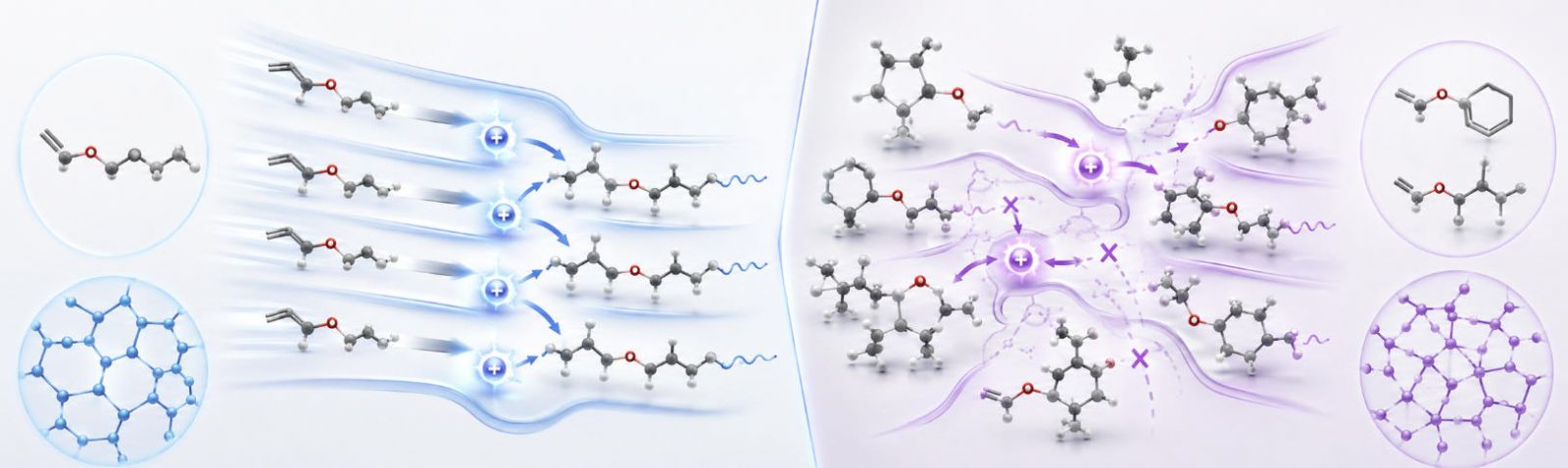
Achieving structural balance in modern coatings, electronic matrices, and copolymer systems requires selecting specific monomer side-chain architectures that match targeted thermal and mechanical application metrics.
For high-affinity copolymerization with electron-deficient matrices—such as maleic anhydride systems to synthesize the critical vinyl methyl ether / maleic anhydride copolymer (PVM/MA) series—short-chain variants provide excellent alternating reactivity. For applications requiring long-term chemical durability and outdoor weatherability, integrating cyclic or hydroxyl-functional options provides robust crosslinking points. Meanwhile, when optimizing matrices for extreme low-temperature flexibility, moisture resistance, or internal plasticization, long-chain aliphatic segments should be integrated to reduce structural stress and maintain structural integrity.
| Monomer Chemical Designation | Structural Classification | Dominant Mechanical Attribute | Primary Application Specialty |
|---|---|---|---|
| Methyl vinyl ether | Short-Chain Aliphatic | Dense Crosslinking, Highly Reactive | PVM/MA Copolymer Synthesis, Adhesives |
| Ethyl vinyl ether | Short-Chain Aliphatic | Fast Cure Speed, Sharp Glass Transition | Chemical Intermediates, Fine Polymers |
| N-Propyl vinyl ether | Linear Aliphatic | Balanced Toughness and Curing Speed | Specialty Coatings, Custom Modifiers |
| Isopropyl vinyl ether | Branched Aliphatic | Increased Tg, Thermal Stability | Precision Electronic Coatings |
| N-Butyl vinyl ether | Medium Aliphatic | Flexibility, Excellent Surface Wetting | Reactive Diluent for Radiation Inks |
| Isobutyl vinyl ether | Branched Aliphatic | Impact Resistance, Adhesion Promotion | Plastic Modifier, Advanced Copolymers |
| Tert-butyl vinyl ether | Highly Branched Steric | High Heat Distortion Temp, Rigidity | Photoresists, High-Resolution Lithography |
| 2-Ethylhexyl vinyl ether | Long Branched Aliphatic | Internal Plasticization, Low Shrinkage | Pressure Sensitive Adhesives (PSAs) |
| Cyclohexyl vinyl ether | Cycloaliphatic | Outstanding Weatherability, High Hardness | FEVE Fluorocarbon Resins, Marine Paints |
| 1,4-Butanediol monovinyl ether | Hydroxyl-Functional | Secondary Dual-Cure Hydroxyl Reactivity | Polyurethane Modification, Reactive Tints |
| 1,4-Butylene glycol divinyl ether | Divinyl Vector | Ultra-High Crosslinking Density, Zero VOC | Fast-Curing UV Inks, 3D Printing Networks |
| Octyl vinyl ether | Long-Chain Aliphatic | Hydrophobic Shielding, Low Viscosity | Water-Resistant Barriers, Viscosity Controls |
| Dodecyl vinyl ether | Long-Chain Fatty Aliphatic | Low Surface Tension, High Elasticity | Lubricant Additives, Structural Sealants |
| Octadecyl vinyl ether | Long-Chain Aliphatic Wax | Crystallinity Control, Water Repellency | Wax Modifiers, Specialty Polyethers |
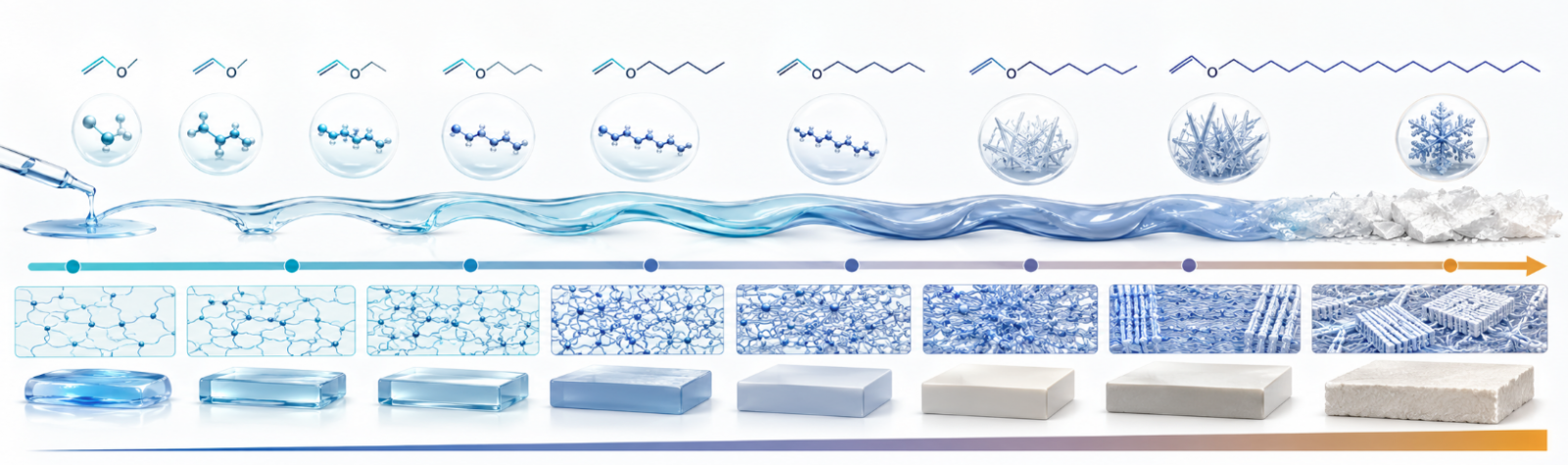
Moving beyond single-functional structures, bifunctional vectors like 1,4-Butylene glycol divinyl ether alter the curing profile by introducing two separate reactive electron-rich centers. This configuration accelerates network formation, allowing formulators to achieve high crosslinking density with minimal radiation dosage. These characteristics are particularly valuable in high-resolution stereolithography (3D printing) and high-speed packaging inks where instant gelation is required.
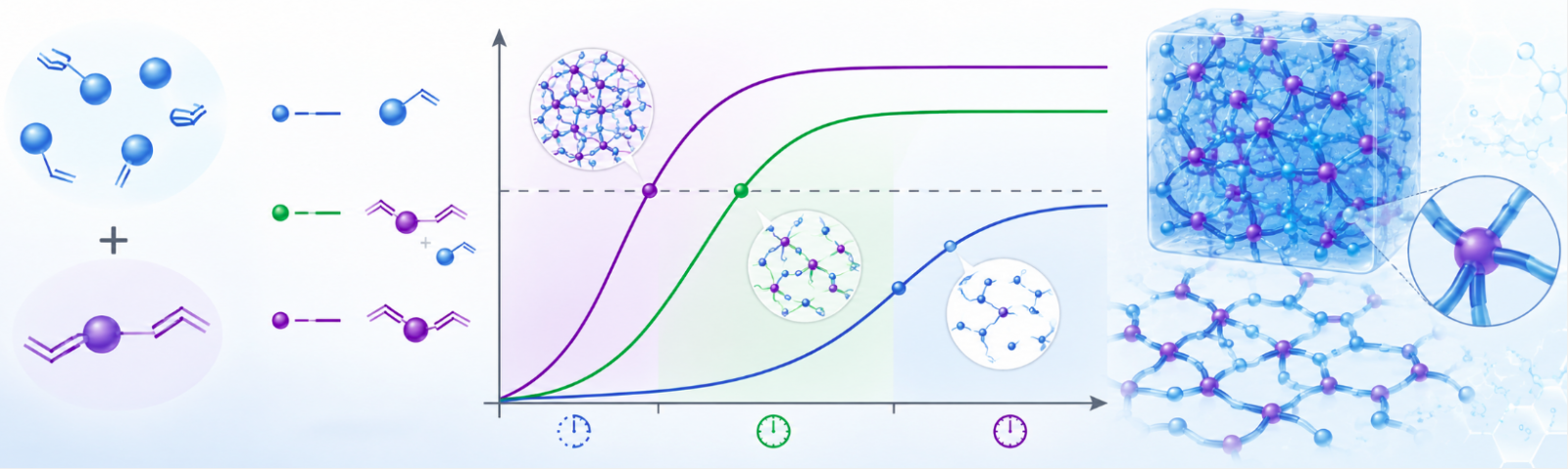
Furthermore, the unique alternating copolymerization behavior of these monomers remains critical in fine chemical manufacturing. When an electron-rich monovinyl compound meets an electron-deficient partner like maleic anhydride, they spontaneously arrange into a highly ordered, alternating structure without requiring expensive catalysts. This precise reaction mechanism forms the foundational chemistry behind the high-performance vinyl methyl ether / maleic anhydride copolymer (PVM/MA) series, providing crucial binding, film-forming, and dispersing performance to global consumer and industrial sectors.
Managing advanced polymer synthesis requires relying on a stable, high-capacity chemical partner. Founded in 1998, Hubei Xinjing New Material Co., Ltd. is a specialized high-tech enterprise dedicated to the R&D, continuous scale production, and global logistics optimization of vinyl ethers, acrolein derivatives, glutaraldehyde, cycloaliphatic epoxy resins, and the vinyl methyl ether / maleic anhydride copolymer (PVM/MA) series. With over 70 commercialized products, we provide robust technical and supply chain security to the global fine chemical market.
Operating nearly 80,000 square meters of modern industrial facilities across three dedicated production hubs—the 35,000 square meters Jiaozuo acetylene-ether base (boasting a 20,000 tons per annum vinyl ether capacity), the 27,000 square meters Jingzhou intermediate center, and the Yingcheng automated pilot facility—Xinjing ensures stable raw material processing and reliable inventory management. Powered by an internal R&D team that accounts for over 15 percent of our workforce, we deliver high-purity functional monomers designed to meet strict regulatory and processing specifications globally.

Claire Dong +86-15871379047
dongweixiao@xinjingchem.com

Room 1201, Building A, Huitong New Yangtze River Center, No. 6 Xudong Street, Wuchang District, Wuhan City, Hubei Province
Hubei Xinjing New Materials Co., Ltd. Copyright (C) 2023 Network support China Chemical Network Global Chemical Network Business Network Shengjian Website Copyright Statement Sitemap XML Hubei ICP No. 2023012319