search
Company Profile
Xinjing New Materials

Technology‑Driven High‑Tech Enterprise in Fine Chemicals

Hubei Xinjing New Material Co., Ltd. (hereinafter referred to as “Xinjing New Materials”) was founded in 1998. It is a specialized R&D and production base deeply engaged in the fields of vinyl ethers, acrolein derivatives, glutaraldehyde, cycloaliphatic epoxy resins, and vinyl methyl ether / maleic anhydride copolymer (PVM/MA). The company has achieved industrial production of more than 70 products. Headquartered in Wuhan, Hubei Province, it has built a full‑industry‑chain service system integrating R&D, quality inspection, warehousing, and logistics.


I. Xinjing Series Industrial Layout: Three Production Bases and R&D Pilot System

Xinjing New Materials has three standardized production bases in Hubei and Henan, forming a strong supply chain guarantee capability:

Production Base Core Positioning & Capability Main Products & Capacity
Yingcheng Xinjing Intelligent production base + pilot base New products: polyether series (e.g., polyvinyl methyl ether, polyoctadecyl vinyl ether), 4‑HBA, 5‑MVO, etc. Capacity: vinyl ethers 5,000 t/a, intermediates 5,000 t/a.
Jiaozuo Xinjing (founded 2003) Vinyl ether production base, equipped with multiple acetylene and ether production lines. After the new plant goes into operation, the old and new plants will run in parallel. Series: methyl vinyl ether, ethyl vinyl ether, isopropyl vinyl ether, n‑butyl vinyl ether, isobutyl vinyl ether, cyclohexyl vinyl ether, etc. These products are listed in the “National Torch Program”. Capacity: vinyl ethers 20,000 t/a; PVM/MA 2,000 t/a.
Jingzhou Xinjing (founded 2007) Intermediate production center; responds to green relocation policies, enjoys brand and technology advantages. Glutaraldehyde, the exclusive 3‑cyclohexene series. Capacity: glutaraldehyde 20,000 t/a; acrolein and its derivatives 15,000 t/a.


II. Plant Area

The Xinjing group operates nearly 80,000 m² of modern industrial land across Hubei and Henan provinces, forming a robust production system. From the 35,000 m² Jiaozuo ether base, to the 27,000 m² Jingzhou cycloaliphatic epoxy resin base, and the pilot‑capable Yingcheng base (16,386 m²), the rational geographical layout ensures raw material supply security and efficient logistics coverage.


III. Investment Scale

Over the years, the Xinjing group has invested hundreds of millions of RMB in fixed assets and technical transformation. In particular, continuous additional investment in the six advanced ether production lines at the Jiaozuo base and the automated pilot units at the Yingcheng base has kept the production processes at the forefront of the industry, providing solid hardware support for manufacturing high‑quality products.


IV. Talent Composition

As a national high‑tech enterprise, Xinjing New Materials places great emphasis on talent density. The company’s R&D personnel account for more than 15% of the workforce, and the core team consists of several senior engineers who have been deeply engaged in the fine chemical industry for decades. Relying on the Wuhan headquarters R&D center, the company has achieved a deep integration model of “talents in Wuhan, transformation in the bases”.


Xinjing Products

It has 3 major production bases, focusing on the development and production of glutaraldehyde, vinyl ethers, cycloaliphatic epoxy resins, and vinyl ether/maleic anhydride copolymer (PVM/MA) series products

Glutaric dialdehyde

Glutaric dialdehyde see more>

Vinyl ether

Vinyl ether see more>

Intermediates

Intermediates see more>

Aliphatic epoxy resin

Aliphatic epoxy resin see more>

Polymer

Polymer see more>

New product

New product see more>
Development path
We are willing to carry out more extensive exchanges and cooperation in technical information, product projects, resource allocation, etc. Let's go hand in hand for mutual benefit and win-win, and create a better future together!
News Center
more >
corporate news
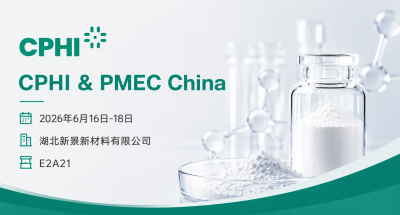
June 16 - 18, 2026, CPHI Exhibition, Hubei Xinjing New Materials Co., Ltd., Booth: E2A21.
more >
industry blog
  • Booth: E2A21, we sincerely invite new and old customers to visit and guide the exchange!
    Booth: E2A21, we sincerely invite new and old customers to visit and guide the exchange!
    June 16 - 18, 2026, CPHI Exhibition, Hubei Xinjing New Materials Co., Ltd., Booth: E2A21.
  • 2025-2030 Global & China Vinyl Ethers Industry Whitepaper
    2025-2030 Global & China Vinyl Ethers Industry Whitepaper
    2025-2030 Global & China Vinyl Ethers Industry Whitepaper Technology Evolution · Supply-Demand · Advanced Applications | Hubei Xinjing New Material Co., Ltd. Executive Summary: The global vinyl ethers market is projected to grow from USD 5.07 billion (2025) to USD 6.68 billion by 2030 at 5.6–6.2% CAGR, driven by pharmaceutical R&D (>USD 200bn annual), SDHI fungicides, and high‑performance polymers. Recent breakthroughs in water‑tolerant Lewis acid catalysts (e.g. B(C₆F₅)₃·Et₂O) have removed the “absolute zero‑water” constraint, enabling cationic polymerization under open‑air, room‑temperature, and even aqueous conditions. This whitepaper details the twelve‑monomer portfolio of Hubei Xinjing New Material Co., Ltd., the leading Chinese manufacturer now supplying electronic‑grade, ultra‑pure vinyl ethers to global photoresist, FEVE coating, and battery binder supply chains. Industry Overview & Standard Definition Vinyl ethers are twelve electron‑rich reactive monomers commercially produced via the Reppe process. Structurally characterized by an ether‑oxygen linked to an active vinyl group, they enable ultra‑fast cationic homopolymerization/photocationic curing, and highly regular alternating copolymerization with electron‑deficient monomers like maleic anhydride or chlorotrifluoroethylene. The global market is set to grow at 5.8% CAGR (2025‑2030), serving as core intermediates for advanced photolithography resists, low‑VOC FEVE fluorocarbon coatings, and high‑performance adhesives. Key Findings & Industry Milestones 1. Breakthrough Scientific Developments Aqueous Cationic Polymerization: Using water‑tolerant boron‑based Lewis acid (B(C₆F₅)₃·Et₂O), scientists achieved controlled cationic polymerization of isobutyl vinyl ether in open air and aqueous suspension – proving active centers propagate stably at monomer/water interfaces. Open‑Air Room‑Temperature Cationic RAFT: Metal‑free organic catalytic systems (PCCP + HBD + CTA) enabled robust cationic reversible addition‑fragmentation chain transfer polymerization under ambient, humid conditions without prior solvent drying. High‑Adhesion AIE Copolymers: Brønsted acid‑mediated stereoselective cationic polymerization integrated tetraphenylethylene (TPE) into cyclohexyl vinyl ether backbones, yielding aggregation‑induced emission (AIE) polymers with thixotropic adhesion outperforming cyanoacrylate superglues. 2. Segmented Market Quantification n‑Propyl Vinyl Ether (PVE): USD 471.3 million (2025) → USD 826.5 million by 2035 (CAGR 5.78%). n‑Butyl Vinyl Ether (BVE): USD 300.5 million (2025) → USD 451.6 million by 2032 (CAGR 5.98%) driven by low‑shrinkage 3D printing and precision sealants. 4‑Hydroxybutyl Vinyl Ether (HBVE): USD 40 million (2026) → USD 60 million by 2035 (CAGR 5.8%), with coatings & fluororesins representing >46% of usage. Physicochemical Properties of 12 Commercial Monomers (Hubei Xinjing) Product (English Link) CAS No. Formula B.P. (°C) Density (g/mL, 25°C) Refractive Index (nD20) Core Downstream Applications Methyl Vinyl Ether (MVE) 107-25-5 C₃H₆O 5.5-6.0 0.772 1.357 PVM/MA dental adhesives, oral care bioadhesives Ethyl Vinyl Ether (EVE) 109-92-2 C₄H₈O 35.5-36.0 0.750 1.376 Chemical amplification resists, eco‑friendly water‑developable resists n-Propyl Vinyl Ether (PVE) 764-47-6 C₅H₁₀O 65.0 0.768 1.391 Advanced packaging reactive diluents, specialty agrochemicals Isopropyl Vinyl Ether (IPVE) 926-65-8 C₅H₁₀O 55.0-57.5 0.754 1.388 Ultra‑low viscosity UV coatings, specialty polymer plasticizers n-Butyl Vinyl Ether (BVE) 111-34-2 C₆H₁₂O 94.0 0.774 1.400 DIW 3D printing binders, UV inks, specialty polymers Isobutyl Vinyl Ether (IBVE) 109-53-5 C₆H₁₂O 82.0-83.0 0.768 1.395 Surgical adhesives, alkyd/polystyrene modifiers tert-Butyl Vinyl Ether (TBVE) 926-66-9 C₆H₁₂O 75.0-78.0 0.762 1.392 High‑activity co‑monomers, chemical amplification photoresists, elastomers 2-Ethylhexyl Vinyl Ether (EHVE) 103-44-6 C₁₀H₂₀O 177-178 0.816 1.428 Viscosity index improvers for lubricants, agricultural insecticides Cyclohexyl Vinyl Ether (CVE) 2182-55-0 C₈H₁₄O 147-148 0.891 1.454 FEVE fluorocarbon resins, marine anticorrosive coatings 4-Hydroxybutyl Vinyl Ether (HBVE) 17832-28-9 C₆H₁₂O₂ 190 (dec) 0.943 1.445 Polycarboxylate superplasticizers, hydroxylated polyurethanes 1,4-Butanediol Divinyl Ether (BDDVE) 3891-33-6 C₈H₁₄O₂ 191.0 0.898 1.444 Bifunctional crosslinkers, superabsorbent polymers n-Octyl Vinyl Ether (OVE) 929-62-4 C₁₀H₂₀O 185-190 0.810 1.425 Hydrophobic paper sizing agent, specialty textile surface treatment Industrial Application Spotlight: FEVE Fluorocarbon Coatings Challenge: Marine bridges and wind turbine blades face salt spray, high humidity, and UV exposure. Traditional coatings degrade within 10 years. Vinyl ether solution: FEVE (fluoroethylene‑vinyl ether) alternating copolymers using Cyclohexyl Vinyl Ether (CVE) and 4‑Hydroxybutyl Vinyl Ether (HBVE). The highly electron‑deficient chlorotrifluoroethylene alternates with electron‑rich CVE/HBVE, forming a durable ‘fluoro‑ether’ backbone. C‑F bonds shield the main chain, while the rigid cyclohexyl ring provides hardness, and HBVE’s hydroxyl groups enable crosslinking with isocyanate curatives – delivering >30 years of corrosion protection. Buyer Guide & Quality Assurance Grade selection: For resin synthesis (e.g., HBVE, CVE) specify acid value 99.5%. For electronic‑grade monomers (EVE, TBVE), require ultra‑high purity (>99.9%) with trace metals 12h mucoadhesion. FAQ 2 – How does n‑butyl vinyl ether reduce shrinkage in 3D printing? Unlike free‑radical acrylates (volumetric shrinkage ~10‑15%), cationic photopolymerization of BVE proceeds via ring‑opening/chain‑growth, lowering shrinkage to ~2‑5%. Flexible ether linkages relax internal stress, preventing warpage. FAQ 3 – What role does ethyl vinyl ether play in PFAS‑free photoresists? EVE acts as an acid‑cleavable protecting group. After UV exposure, photoacid triggers deprotection, creating a solubility switch that allows development with pure water or mild alkaline developers – eliminating hazardous fluorinated solvents. Industry Outlook (2025‑2030) With the removal of “absolute anhydrous” constraints via water‑tolerant catalysis, vinyl ether systems will expand into waterborne low‑VOC coatings and advanced electronic encapsulation. Rising demand for high‑purity semiconductor materials, PFAS‑free lithography, and ultra‑durable FEVE coatings positions first‑tier manufacturers like Hubei Xinjing New Material Co., Ltd. as key enablers. Leveraging continuous Reppe processing, ISO/cleanroom quality systems, and full‑series monomer capacity, Hubei Xinjing is set to supply the global shift toward green and high‑value chemical manufacturing. Selected references: Sigma‑Aldrich product catalogs, NIST Chemistry WebBook, ChemicalBook, Spherical Insights, Research and Markets, BASF product finder, and peer‑reviewed publications (MDPI, RSC, ACS).

SUBSIDIARY

Hand in hand, mutually beneficial and win-win, create a better future together!

Christi Duan +86-13667170329

hbxj9@xinjingchem.com

China · Hubei

Room 1201, Building A, Huitong New Yangtze River Center, No. 6 Xudong Street, Wuchang District, Wuhan City, Hubei Province